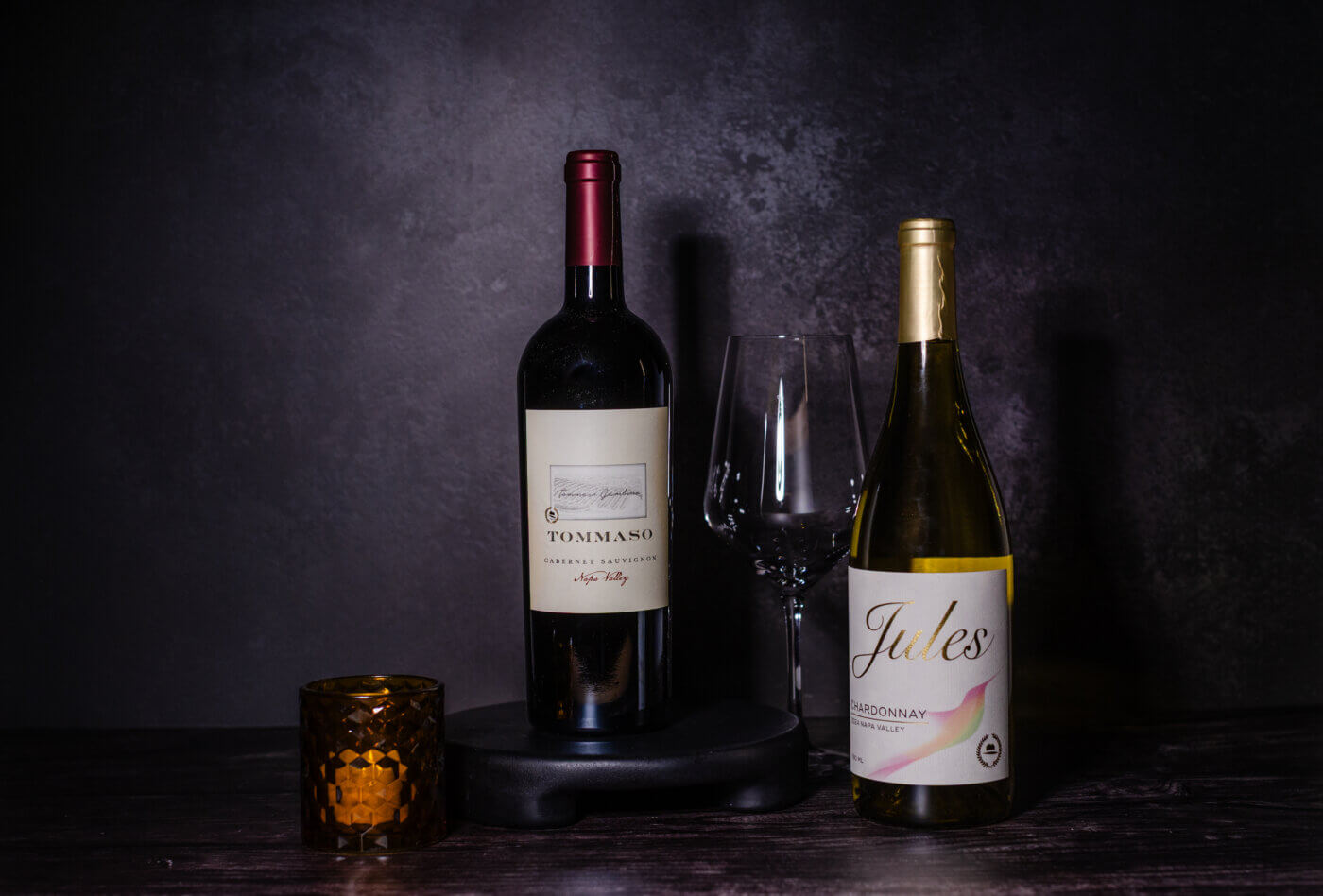
There may be no place on earth that puts American wine on the map quite like Napa Valley. Thirty miles of valley floor and hillside running north from San Pablo Bay, it's a strip of California where warm, sun-drenched afternoons give way to cool nights rolling in off the Pacific. The kind of day-to-night temperature swing that lets grapes ripen slowly and hold onto their freshness. Add volcanic and alluvial soils and a patchwork of microclimates packed into a small footprint, and you get wines that manage to be powerful and graceful at the same time. Two bottles tell that story neatly from opposite ends of the spectrum: the Jules Chardonnay and the Tommaso Napa Valley Cabernet Sauvignon.
What Makes Napa, Napa
Napa earned its reputation the hard way, most famously at the 1976 "Judgment of Paris," when California wines bested France's best in a blind tasting and rewrote the rules about where great wine could come from. What keeps the valley on top is the land itself. The mornings are cool, the afternoons are hot, and the nights cool back down again, and that rhythm shows up in the glass as ripe fruit balanced by lively acidity. Within the larger Napa Valley appellation sit smaller, storied districts — Oakville among them — each with its own personality. Jules and Tommaso both pull from this character, one leaning into golden richness, the other into dark, structured depth.
Jules Chardonnay, Napa Valley
The Jules Chardonnay hails from Oakville, a celebrated stretch of valley floor better known for its Cabernet but more than capable of turning out a serious white. It's 100% Chardonnay, aged in French oak, and it wears Napa's sunshine proudly. It’s full-bodied and golden, made for people who like a little richness in their white wine.
Nose: ripe pear and golden apple up front, with honeyed apricot and a soft whisper of vanilla from the oak.
Palate: lush and rounded, stone fruit and lemon curd carried along by a light note of baking spice, all kept lively by a crisp line of acidity.
Finish: long and creamy, finishing brighter than it starts, with a citrus snap that keeps you coming back.
What makes it special is that balance. It has the weight Chardonnay lovers want without tipping into anything heavy or tiring, which is exactly the trick a warm climate like Napa's allows when the fruit is grown and handled with care.
Best pairings: Roasted chicken, seared scallops, a creamy pasta, or a cheese board (think a wedge of Brie or aged Gouda).
Tommaso Napa Valley Cabernet Sauvignon
If Chardonnay shows Napa's softer side, Cabernet Sauvignon is the grape that built the legend. The Tommaso Cabernet is classic Napa Cab in the way that phrase is supposed to mean something—dark, generous, and built for the table.
Nose: blackcurrant and black cherry lead, layered with cedar, baking spice, and a hint of mocha.
Palate: full-bodied and plush, with dark berry and plum folding into notes of cocoa over supple, well-mannered tannins.
Finish: long and smooth, closing on a touch of espresso and sweet oak spice.
This is the style that made Napa Cabernet a household name: ripe and bold, but polished enough that the tannins never get in the way. It's approachable enough to open on a quiet weeknight and serious enough for the dinner you actually want to impress.
Best pairings: Anything off the grill or out of the smoker, a ribeye is the textbook move, but it shines just as brightly with braised short ribs, a hearty mushroom risotto, or a wedge of sharp cheddar. Save the last glass for a square of dark chocolate.
One Valley, Two Moods
That's the fun of tasting these two side by side. The Jules captures Napa in a golden, sunlit mood (bright, generous, easy to love), while the Tommaso shows the valley's deeper, more contemplative side. Together, they're a quick tour of why Napa Valley still sets the standard, and both are waiting on a shelf near you, brought in by Georgia Crown.
